Book Your FREE Consultation

Category: Menopause Insights

Evidence-based articles helping professional women navigate perimenopause and menopause with confidence.

  • Menopause Sleep Problems: 8 CBT Techniques to Improve Your Sleep Naturally

    Menopause Sleep Problems: 8 CBT Techniques to Improve Your Sleep Naturally

    Introduction

    Menopause sleep problems are among the most frustrating symptoms experienced during perimenopause and menopause. Whether you’re struggling to fall asleep, waking repeatedly during the night or lying awake with a racing mind, poor sleep can quickly affect your concentration, confidence and emotional wellbeing. The encouraging news is that Cognitive Behavioural Therapy (CBT) offers practical, evidence-based techniques that can improve sleep without relying solely on medication.

    Why Does Menopause Affect Sleep?

    Hormonal changes during perimenopause influence your body’s temperature regulation, stress response and natural sleep-wake cycle. Hot flushes, night sweats, anxiety and changing hormone levels can all contribute to disrupted sleep. Understanding these changes can help you approach sleep difficulties with greater self-compassion rather than frustration.

    Signs Your Sleep Difficulties May Be Related to Menopause

    You may notice:

    • Difficulty falling asleep
    • Waking frequently during the night
    • Early morning waking
    • Feeling unrefreshed despite sleeping
    • Night sweats
    • Racing thoughts at bedtime
    • Increased fatigue during the day
    • Poor concentration

    8 CBT Techniques to Improve Your Sleep

    1. Keep a Consistent Sleep Schedule

    Go to bed and wake up at similar times every day, including weekends.

    2. Create a Relaxing Bedtime Routine

    Spend the last hour before bed reading, stretching or practising slow breathing rather than scrolling on your phone.

    3. Reduce Screen Exposure

    Blue light from phones and tablets can delay the release of melatonin, making it harder to fall asleep.

    4. Challenge Unhelpful Sleep Thoughts

    Avoid thoughts such as “I’ll never cope tomorrow if I don’t sleep.” CBT teaches you to replace these with more balanced thinking.

    5. Keep the Bedroom Cool

    A cooler environment can reduce discomfort from night sweats and support better-quality sleep.

    6. Limit Late-Day Caffeine and Alcohol

    Both can interfere with sleep quality, even if they don’t stop you falling asleep initially.

    7. Use Relaxation Before Bed

    Progressive muscle relaxation, mindfulness or guided breathing can reduce physical tension and help prepare your body for sleep.

    8. Get Morning Daylight

    Natural light soon after waking helps regulate your body’s internal clock and supports healthier sleep patterns.

    When Should You Seek Help?

    If poor sleep continues for several weeks and is affecting your work, mood or daily functioning, it’s worth speaking to your GP or a qualified CBT therapist. CBT for insomnia (CBT-I) has a strong evidence base, as recommended by the NICE Guidelines, and can be highly effective for persistent sleep difficulties. If anxiety is impacting on your sleep, there you may also like to explore these strategies to help manage anxiety and calm your mind naturally.

    Key Takeaway

    Sleep problems during menopause are common, but they don’t have to become your new normal. Small, consistent changes supported by evidence-based CBT techniques can improve sleep quality and help you wake feeling calmer, clearer and more energised.

    Ready to Regain Better Sleep?

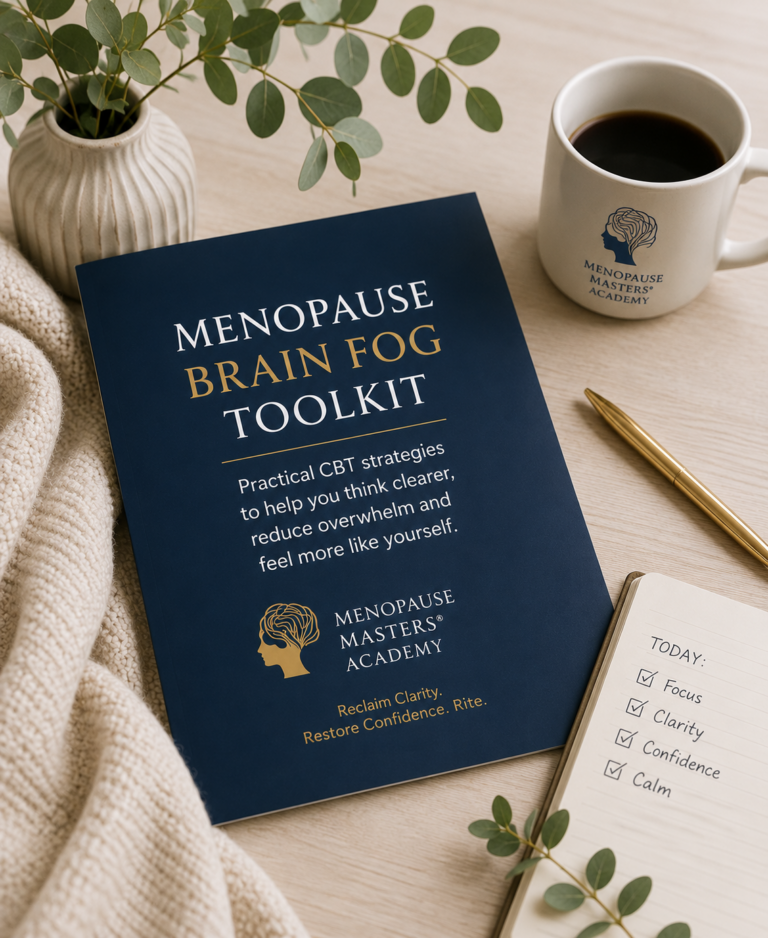
    Download the FREE Menopause Brain Fog Toolkit for practical CBT strategies that also support calmer thinking, improved focus and better emotional wellbeing.

  • Menopause Anxiety: 9 CBT Strategies to Calm Your Mind Naturally

    Menopause Anxiety: 9 CBT Strategies to Calm Your Mind Naturally

    Menopause anxiety can appear suddenly, even if you’ve never experienced anxiety before. Many professional women describe feeling constantly on edge, overwhelmed by everyday tasks or unable to switch their minds off. The hormonal changes of perimenopause can make your nervous system more reactive, but the good news is that there are evidence-based CBT techniques that can help you regain calm and confidence.

    Why Does Menopause Cause Anxiety?

    Hormonal changes during perimenopause influence the brain chemicals involved in regulating mood and stress. Falling oestrogen levels can affect serotonin, dopamine and the body’s stress response, making you feel more emotionally sensitive than before. This doesn’t mean you’re “losing control”—it means your nervous system is working under different conditions. Understanding this can reduce self-criticism and help you respond with compassion rather than fear.

    Signs Your Anxiety May Be Hormone Related

    Many women experience symptoms such as:

    • racing thoughts
    • constant worrying
    • feeling overwhelmed
    • irritability
    • difficulty concentrating
    • poor sleep
    • heart palpitations
    • muscle tension
    • feeling unable to relax

    These symptoms often fluctuate alongside other menopause symptoms, making them feel unpredictable.

    9 CBT Strategies That Can Help Calm Menopause Anxiety

    1. Slow Your Breathing

    Practise diaphragmatic breathing for five minutes to activate your body’s relaxation response and reduce the physical symptoms of anxiety.

    2. Recognise Anxious Thoughts

    Notice when your mind jumps to worst-case scenarios. Simply identifying these thoughts is the first step towards changing them.

    3. Challenge Catastrophic Thinking

    Ask yourself: “What evidence do I have for this thought?” CBT helps replace fear-based assumptions with more balanced thinking.

    4. Schedule Recovery Time

    Your nervous system needs opportunities to recover. Build short breaks, relaxation and enjoyable activities into your daily routine rather than waiting until you feel overwhelmed.

    5. Improve Your Sleep Routine

    Poor sleep amplifies anxiety. Aim for a consistent bedtime, reduce screen use before bed and create a calming evening routine.

    6. Reduce Stimulants

    Too much caffeine, alcohol or excess sugar can increase feelings of anxiety, particularly during perimenopause. Notice whether reducing these improves your symptoms.

    7. Break Large Tasks into Smaller Steps

    When anxiety makes everything feel overwhelming, divide work into manageable actions. Completing small tasks builds momentum and reduces avoidance.

    8. Practise Mindfulness

    Spend a few minutes each day bringing your attention back to the present moment. Mindfulness helps interrupt the cycle of worrying about the future.

    9. Seek Professional Support When Needed

    If anxiety is persistent or affecting your work, relationships or quality of life, evidence-based CBT can provide practical tools to help you regain confidence and emotional balance.

    When Should You Seek Professional Support?

    Occasional anxiety is common during menopause, but if it begins affecting your work, relationships or quality of life, seeking professional support is important. CBT has a strong evidence base for treating anxiety, as evidenced in the NICE Guidelines, and can provide practical skills that help you regain confidence and emotional balance.

    Key Takeaway

    Although menopause anxiety can feel frightening, it is treatable. Understanding what’s happening in your brain and learning practical CBT strategies can help you feel calmer, more resilient and more like yourself again.

    Ready to Feel More in Control?

    Download the FREE Menopause Brain Fog Toolkit for practical CBT techniques to reduce overwhelm, improve focus and rebuild confidence.

  • Menopause Brain Fog: Why It Happens and How to Think Clearly Again

    Menopause Brain Fog: Why It Happens and How to Think Clearly Again

    Introduction

    Menopause brain fog is one of the most commonly reported cognitive symptoms during perimenopause and menopause.

    You may find yourself forgetting familiar words, losing your train of thought during meetings, struggling to concentrate or walking into a room and forgetting why you went there. Tasks that once felt straightforward can suddenly require much more mental effort.

    For professional women, these changes can be particularly unsettling. When your work depends on clear thinking, decision-making and communication, brain fog may lead you to question abilities that you have spent years developing.

    However, menopause brain fog is not evidence that you are becoming less intelligent or less capable. It is a recognised experience associated with hormonal change, disrupted sleep, anxiety, stress and increased cognitive load.

    Understanding what is happening is the first step towards managing it.

    What Does Menopause Brain Fog Feel Like?

    Brain fog is not a formal diagnosis. It is a term women often use to describe a collection of cognitive difficulties.

    These may include:

    • forgetting names, words or appointments
    • losing your train of thought
    • difficulty concentrating
    • feeling mentally slower than usual
    • becoming more easily distracted
    • struggling to organise or prioritise tasks
    • taking longer to process information
    • feeling mentally exhausted after demanding work
    • finding multitasking more difficult
    • doubting decisions you would previously have made confidently

    The experience varies from woman to woman. Symptoms may also fluctuate, with some days feeling much clearer than others.

    That unpredictability can make brain fog especially frustrating.

    Why Does Menopause Brain Fog Happen?

    During perimenopause and menopause, levels of hormones such as oestrogen and progesterone fluctuate and eventually decline.

    Oestrogen interacts with several brain systems involved in memory, attention, mood and sleep. Hormonal changes may therefore affect how efficiently information is processed, recalled and organised.

    However, hormones are rarely the only factor.

    Menopause brain fog can also be intensified by:

    • disrupted or insufficient sleep
    • night sweats and hot flushes
    • anxiety and persistent worry
    • low mood
    • workplace pressure
    • caring responsibilities
    • chronic stress
    • reduced confidence
    • trying to manage too many tasks simultaneously

    When several of these occur together, the brain is working under a much heavier load.

    A woman may interpret the resulting difficulty as evidence that her memory is failing, when in reality her cognitive resources are being stretched by hormonal, emotional and practical demands.

    Brain Fog Is Not a Loss of Intelligence

    One of the most important things to understand is that brain fog does not erase your experience, knowledge or expertise.

    You have not suddenly lost the skills you spent years developing.

    The information is still there, but accessing it may temporarily feel slower or less reliable. This can be compared to having too many applications open on a computer. The system has not lost its ability, but performance may slow when it is trying to process too much at once.

    Unfortunately, women often respond to these changes with harsh self-criticism.

    You may think:

    • “I should be able to cope with this.”
    • “Why can everyone else manage?”
    • “I’m becoming incompetent.”
    • “What if people notice?”
    • “I’m not as capable as I used to be.”

    These thoughts understandably increase anxiety. Anxiety then consumes further attention and mental energy, making concentration even more difficult.

    This can create a cycle in which brain fog fuels anxiety, and anxiety worsens brain fog.

    How Menopause Brain Fog Can Affect Confidence

    Cognitive symptoms can have a significant emotional impact.

    A forgotten word during an important meeting may seem like a small event, but it can trigger powerful self-doubt. You may begin monitoring yourself closely, worrying about whether you will make another mistake. Brain fog can also contribute to a significant loss of confidence during menopause.

    As confidence reduces, you may:

    • avoid contributing in meetings
    • overprepare for routine tasks
    • repeatedly check your work
    • delay decisions
    • avoid presentations
    • withdraw from opportunities
    • become reluctant to take on responsibility
    • interpret normal mistakes as evidence of decline

    These behaviours may reduce anxiety temporarily, but they often reinforce the belief that you can no longer cope.

    CBT helps identify and interrupt this cycle.

    How CBT Can Help With Menopause Brain Fog

    Cognitive Behavioural Therapy focuses on the relationship between thoughts, emotions, physical symptoms and behaviours.

    CBT does not claim that brain fog is “all in your mind”. Instead, it helps you respond to genuine cognitive and emotional symptoms in a way that reduces distress and improves day-to-day functioning.

    CBT-based strategies can help you:

    • notice catastrophic or self-critical thoughts
    • question assumptions about competence
    • reduce anxiety around memory lapses
    • develop more effective coping systems
    • manage workload and cognitive demands
    • reduce unhelpful avoidance
    • rebuild confidence gradually
    • respond to mistakes with greater perspective

    For example, instead of thinking:

    “I forgot that word because I’m becoming incompetent,”

    you might learn to respond:

    “I am experiencing a recognised menopause symptom. One moment of difficulty does not cancel out my experience or ability.”

    This is not false reassurance. It is a more balanced interpretation of what happened.

    Practical Strategies to Improve Clarity

    Small changes can reduce cognitive overload and make everyday tasks more manageable.

    Reduce unnecessary multitasking

    Multitasking places high demands on attention and working memory.

    Where possible, complete one task at a time. Close unnecessary browser tabs, silence non-essential notifications and give yourself a defined period of focused work.

    Use external memory supports

    Using reminders is not a sign of failure. It is a practical way to reduce the load placed on working memory.

    Consider using:

    • written task lists
    • calendar alerts
    • meeting notes
    • voice reminders
    • checklists
    • templates
    • labelled folders
    • a consistent place for important items

    Work with your energy patterns

    Notice when your concentration tends to be strongest.

    Schedule demanding tasks, decision-making or detailed work during your clearest part of the day where possible. Use lower-energy periods for routine or administrative tasks.

    Break tasks into smaller stages

    A large task can feel overwhelming when attention is reduced.

    Define the first small action rather than focusing on the whole task. Completing one manageable step often reduces anxiety and helps momentum return.

    Pause before reacting to self-critical thoughts

    When you notice a thought such as “I’m losing my ability”, ask:

    • What evidence supports this thought?
    • What evidence does not support it?
    • Am I judging myself based on one difficult moment?
    • What would I say to another woman experiencing the same symptom?
    • Is there a more balanced explanation?

    Prioritise sleep and recovery

    Poor sleep can significantly affect memory, attention and emotional regulation.

    Although sleep difficulties may require their own assessment and support, protecting a consistent wind-down routine, reducing late-night work and allowing adequate recovery can help reduce cognitive strain.

    Ask for appropriate workplace support

    You may benefit from practical adjustments such as:

    • written follow-up after meetings
    • protected focus time
    • reduced interruptions
    • flexibility around demanding tasks
    • clearer prioritisation
    • scheduled breaks
    • temporary workload adjustments

    Support does not mean you are incapable. It can help you remain effective while symptoms are being managed.

    When to Seek Further Advice

    Brain fog is common during menopause, but new, severe or rapidly worsening cognitive symptoms should not automatically be assumed to be hormonal.

    Speak with your GP or another appropriately qualified healthcare professional if symptoms are persistent, significantly affecting daily life or accompanied by other concerning changes.

    A healthcare professional can consider possible contributing factors such as:

    • menopause
    • sleep problems
    • medication effects
    • thyroid difficulties
    • vitamin deficiencies
    • anxiety or depression
    • other physical or neurological conditions

    Seeking assessment is a responsible step, not an overreaction.

    The NHS menopause information, provides further information about common menopause symptoms and available support.

    You Have Not Lost Your Capability

    Menopause brain fog can make you feel disconnected from the confident, organised and capable person you know yourself to be.

    But temporary difficulty accessing words, maintaining concentration or processing information does not erase your professional competence.

    Your knowledge, judgement and experience remain.

    With greater understanding, practical coping strategies and appropriate professional support, it is possible to reduce the impact of brain fog and rebuild trust in yourself.

    Ready to Feel Clearer and More in Control?

    If menopause brain fog is affecting your concentration, confidence or performance at work, you do not have to simply push through it.

    Download the free Menopause Brain Fog Toolkit for practical CBT-based strategies to help you manage overwhelm, support clearer thinking and rebuild confidence.

    You can also explore the Menopause Masters® Academy for structured, evidence-based support.

  • Menopause Loss of Confidence: Why You No Longer Feel Like Yourself (And How to Rebuild It)

    Menopause Loss of Confidence: Why You No Longer Feel Like Yourself (And How to Rebuild It)

    Menopause loss of confidence is one of the most common psychological symptoms experienced during perimenopause and menopause. Many professional women begin questioning their abilities despite years of knowledge and experience. Menopause loss of confidence can affect every area of your life—from work performance to relationships and self-esteem.

    One of the most unsettling experiences during perimenopause and menopause is the feeling that you are no longer quite yourself.

    You may still have the same knowledge, experience and abilities, yet brain fog, anxiety, disrupted sleep and emotional overwhelm can make you question your confidence and competence.

    These changes can feel particularly distressing when you have spent years building a career, supporting others and managing significant responsibilities. The important thing to remember is that struggling during menopause does not mean you have suddenly become less capable.

    Why Menopause Loss of Confidence Happens
    and can affect Your Sense of Self

    Many women believe menopause loss of confidence means they are no longer capable. They tell me menopause doesn’t simply affect their body—it affects how they see themselves.

    You may have spent years building a successful career, supporting colleagues, raising a family or becoming known as someone others rely on. Then, almost unexpectedly, everyday tasks begin to feel harder. Words disappear mid-sentence, your concentration slips, and decisions that once felt straightforward suddenly require far more effort.

    It is entirely understandable that these experiences can begin to influence your confidence.

    This isn’t because you’ve become less capable.

    It’s because the hormonal changes of perimenopause and menopause can influence the brain systems responsible for attention, memory, emotional regulation and stress resilience. When these symptoms occur together, they can create the false impression that you’ve somehow “lost yourself.”

    Brain Fog Is Not a Reflection of Your Intelligence

    One of the biggest myths surrounding menopause is that brain fog means your intelligence is declining.

    It doesn’t.

    Brain fog is a recognised cognitive symptom experienced by many women during perimenopause and menopause. You might notice:

    • Forgetting names or appointments
    • Losing your train of thought mid-conversation
    • Walking into a room and forgetting why
    • Finding it difficult to multitask
    • Taking longer to process information
    • Feeling mentally exhausted after tasks that once felt effortless

    These experiences can feel frightening, particularly if you’ve always been highly organised or worked in a demanding professional role.

    Importantly, brain fog does not erase your years of knowledge, experience or expertise. Your brain is responding to hormonal change and increased cognitive load—not a loss of ability.

    How Anxiety Can Erode Confidence

    Hormonal fluctuations can increase the sensitivity of the brain’s stress response system.

    As a result, situations that previously felt manageable may suddenly feel overwhelming.

    You might begin second-guessing decisions, worrying excessively about making mistakes or replaying conversations long after they’ve ended. Many women describe feeling constantly “on edge,” even when there is no obvious reason.

    Over time, anxiety can fuel a cycle of self-doubt.

    You begin questioning your judgement.

    Then you lose confidence in your decisions.

    Which increases anxiety further.

    Breaking this cycle requires more than simply trying to “think positively.” It involves understanding how thoughts, emotions, behaviours and physical symptoms interact—one of the core principles of Cognitive Behavioural Therapy (CBT).

    The Workplace Impact

    For many professional women, menopause symptoms become most noticeable at work.

    Presentations that once felt routine may suddenly feel intimidating.

    You may hesitate to contribute in meetings because you’re worried you’ll forget what you wanted to say. Concentration can become more difficult, particularly during long periods of sustained attention or when juggling multiple priorities.

    These challenges often lead women to question their professional competence, despite years of experience and achievement.

    Research consistently shows that menopause symptoms can affect productivity, confidence and workplace wellbeing. Yet this does not mean your career has to suffer.

    With the right strategies and support, many women regain confidence and continue to thrive professionally. Understanding menopause loss of confidence is the first step towards rebuilding it.

    How CBT Can Help You Rebuild Confidence

    Cognitive Behavioural Therapy (CBT) is one of the most extensively researched psychological approaches for managing anxiety, stress and unhelpful thinking patterns. CBT can help reduce menopause loss of confidence by changing unhelpful thinking patterns.

    Rather than focusing solely on symptoms, CBT helps you understand the relationship between your thoughts, emotions, behaviours and physical experiences.

    Within menopause, CBT can help you:

    • Challenge self-critical thinking
    • Reduce anxiety and worry
    • Improve emotional resilience
    • Build confidence in everyday situations
    • Develop practical coping strategies for brain fog
    • Improve sleep habits and stress management

    At Menopause Masters®, CBT is combined with specialist menopause knowledge to provide practical, evidence-based strategies that can be applied immediately in daily life.

    Practical Steps You Can Start Today

    Although menopause can feel overwhelming, small changes often create significant improvements over time.

    Consider beginning with these evidence-based strategies:

    • Pause before treating a difficult thought as a fact.
    • Write down evidence of your existing skills and achievements.
    • Break complex tasks into smaller, manageable stages.
    • Reduce unnecessary multitasking during periods of brain fog.
    • Build regular recovery time into demanding days.
    • Speak to an appropriately qualified healthcare professional about symptoms that are affecting daily life.

    Consistency is more important than perfection. Small, sustainable habits often produce the greatest long-term improvements.

    When to Seek Additional Support

    While self-help strategies can be extremely effective, there are times when additional support is appropriate.

    If menopause symptoms are affecting your relationships, work performance, emotional wellbeing or overall quality of life, it may be beneficial to seek professional guidance.

    A healthcare professional can discuss the full range of treatment options available, which may include lifestyle changes, psychological approaches such as CBT, medical treatments or a combination of these, depending on your individual circumstances.

    Seeking support is not a sign of weakness. It is a proactive step towards regaining confidence, clarity and control.

    For more information about menopause symptoms, the NHS menopause guide provides an excellent overview. https://www.nhs.uk/conditions/menopause/

    Conclusion

    Menopause can temporarily change how you think, feel and experience the world—but it does not define who you are.

    The confidence, knowledge and experience you’ve built throughout your life have not disappeared. They may simply be hidden beneath symptoms that are both understandable and manageable.

    With evidence-based strategies, appropriate support and a greater understanding of what’s happening in your brain and body, it is entirely possible to regain clarity, rebuild confidence and move forward with renewed resilience.

    Ready to Take the First Step?

    If brain fog, anxiety or a loss of confidence are affecting your daily life, you don’t have to navigate menopause alone.
    Download my FREE Menopause Brain Fog Toolkit for practical, evidence-based CBT strategies you can begin using today.
    Or, if you’d like personalised support, you can book a confidential consultation to explore how specialist menopause-focused CBT may help you regain confidence, clarity and control.