
Menopause Anxiety: 9 CBT Strategies to Calm Your Mind Naturally
Menopause anxiety can appear suddenly, even if you’ve never experienced anxiety before. Many professional women describe feeling constantly on edge, overwhelmed by everyday tasks or unable to switch their minds off. The hormonal changes of perimenopause can make your nervous system more reactive, but the good news is that there are evidence-based CBT techniques that can help you regain calm and confidence.
Why Does Menopause Cause Anxiety?
Hormonal changes during perimenopause influence the brain chemicals involved in regulating mood and stress. Falling oestrogen levels can affect serotonin, dopamine and the body’s stress response, making you feel more emotionally sensitive than before. This doesn’t mean you’re “losing control”—it means your nervous system is working under different conditions. Understanding this can reduce self-criticism and help you respond with compassion rather than fear.
Signs Your Anxiety May Be Hormone Related
Many women experience symptoms such as:
- racing thoughts
- constant worrying
- feeling overwhelmed
- irritability
- difficulty concentrating
- poor sleep
- heart palpitations
- muscle tension
- feeling unable to relax
These symptoms often fluctuate alongside other menopause symptoms, making them feel unpredictable.
9 CBT Strategies That Can Help Calm Menopause Anxiety
1. Slow Your Breathing
Practise diaphragmatic breathing for five minutes to activate your body’s relaxation response and reduce the physical symptoms of anxiety.
2. Recognise Anxious Thoughts
Notice when your mind jumps to worst-case scenarios. Simply identifying these thoughts is the first step towards changing them.
3. Challenge Catastrophic Thinking
Ask yourself: “What evidence do I have for this thought?” CBT helps replace fear-based assumptions with more balanced thinking.
4. Schedule Recovery Time
Your nervous system needs opportunities to recover. Build short breaks, relaxation and enjoyable activities into your daily routine rather than waiting until you feel overwhelmed.
5. Improve Your Sleep Routine
Poor sleep amplifies anxiety. Aim for a consistent bedtime, reduce screen use before bed and create a calming evening routine.
6. Reduce Stimulants
Too much caffeine, alcohol or excess sugar can increase feelings of anxiety, particularly during perimenopause. Notice whether reducing these improves your symptoms.
7. Break Large Tasks into Smaller Steps
When anxiety makes everything feel overwhelming, divide work into manageable actions. Completing small tasks builds momentum and reduces avoidance.
8. Practise Mindfulness
Spend a few minutes each day bringing your attention back to the present moment. Mindfulness helps interrupt the cycle of worrying about the future.
9. Seek Professional Support When Needed
If anxiety is persistent or affecting your work, relationships or quality of life, evidence-based CBT can provide practical tools to help you regain confidence and emotional balance.
When Should You Seek Professional Support?
Occasional anxiety is common during menopause, but if it begins affecting your work, relationships or quality of life, seeking professional support is important. CBT has a strong evidence base for treating anxiety, as evidenced in the NICE Guidelines, and can provide practical skills that help you regain confidence and emotional balance.
Key Takeaway
Although menopause anxiety can feel frightening, it is treatable. Understanding what’s happening in your brain and learning practical CBT strategies can help you feel calmer, more resilient and more like yourself again.
Ready to Feel More in Control?
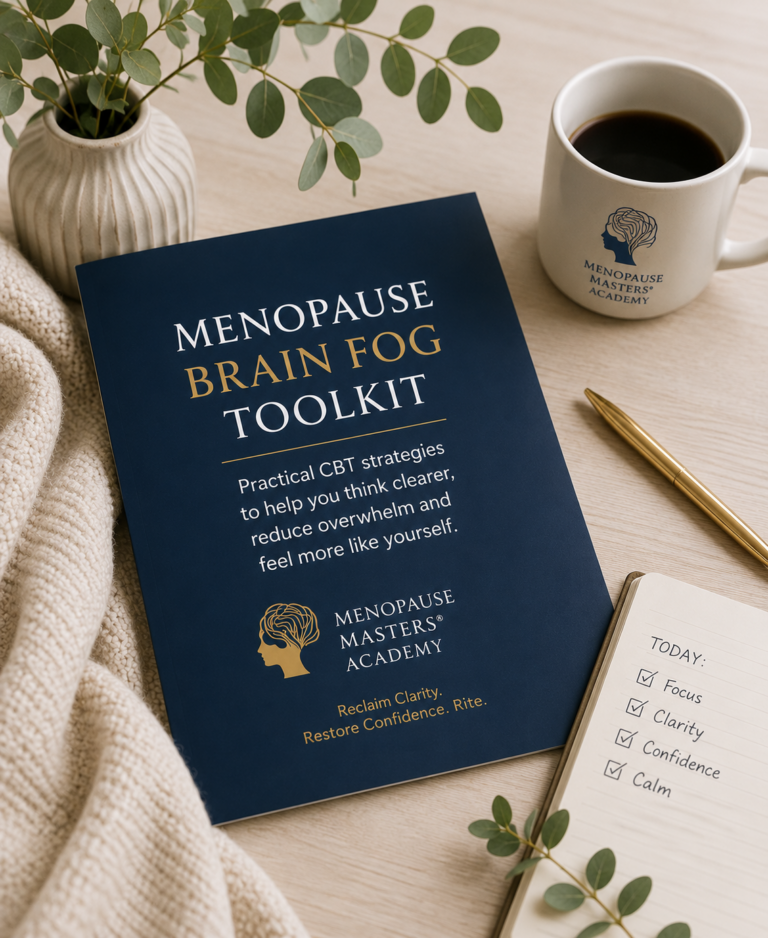
Download the FREE Menopause Brain Fog Toolkit for practical CBT techniques to reduce overwhelm, improve focus and rebuild confidence.